
📈 TRENDING
You're never really just watching the best AI reels anymore — they hand you a job. Today's three each drop you into a seat and dare you to look away. The craft isn't the render now; it's how fast a single creator can make the scene feel like yours.
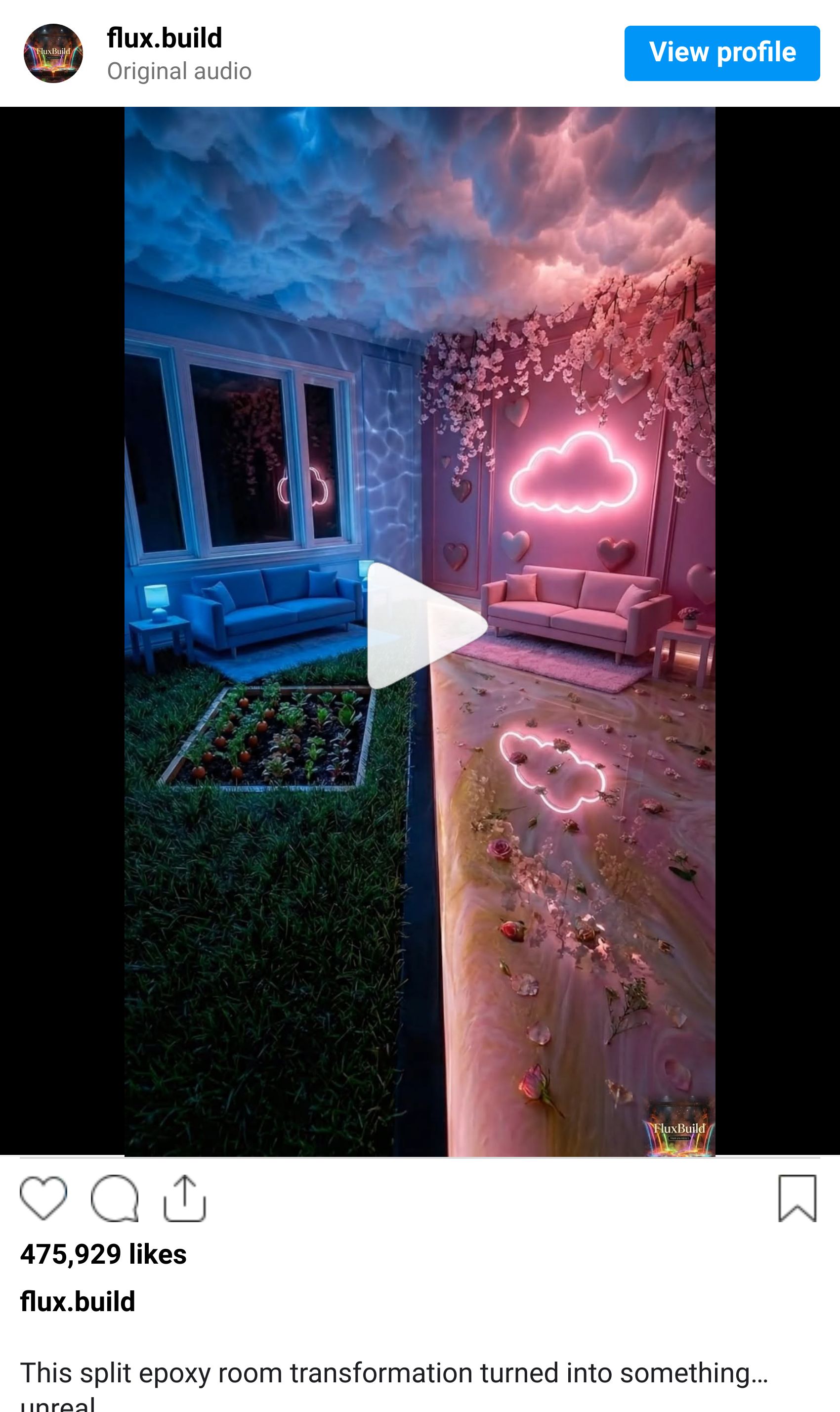
A single room split into two impossible dream worlds — and a vote on which one wins (44M views)
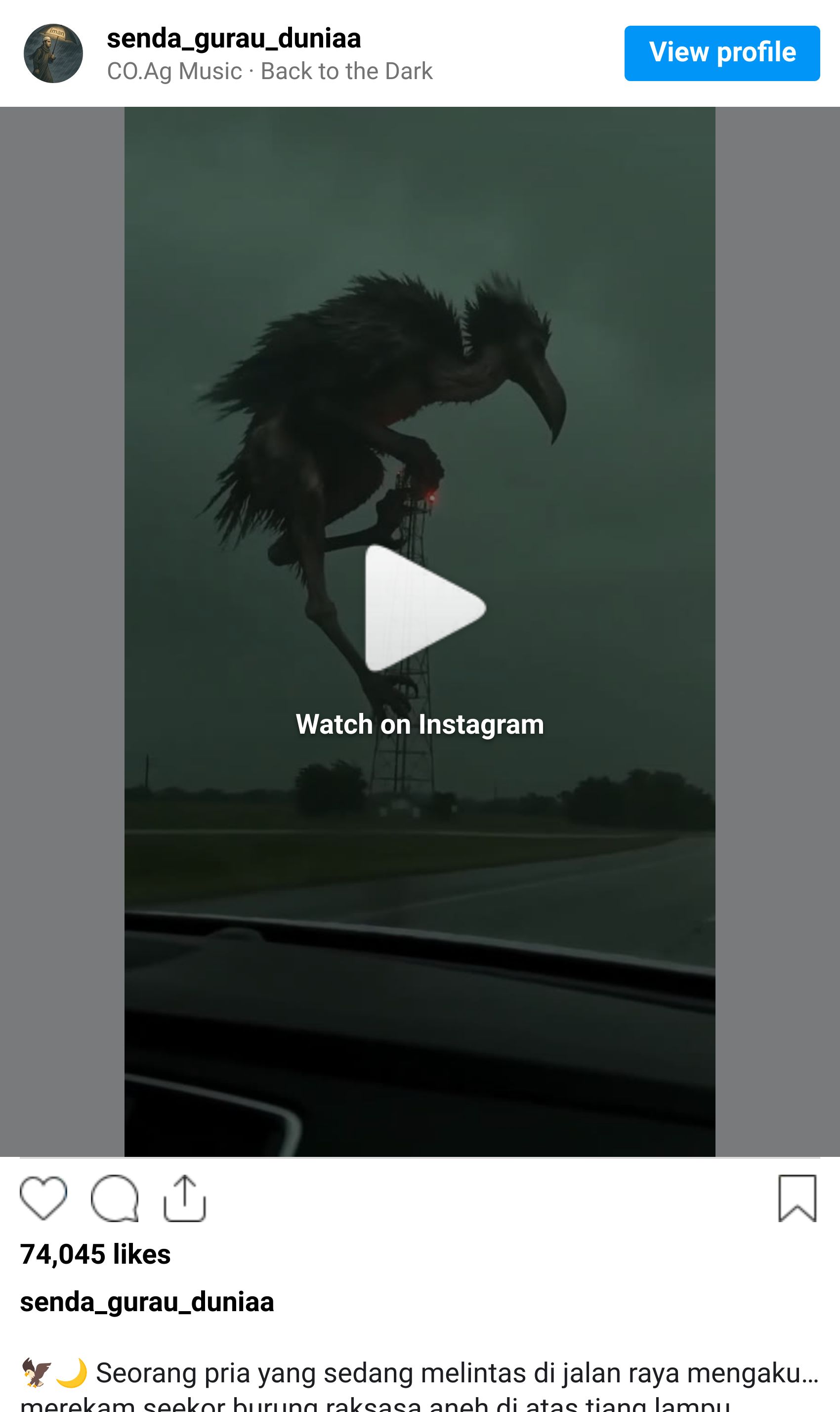
A creature perched on a roadside tower, shot like something a driver actually saw (3.2M views)
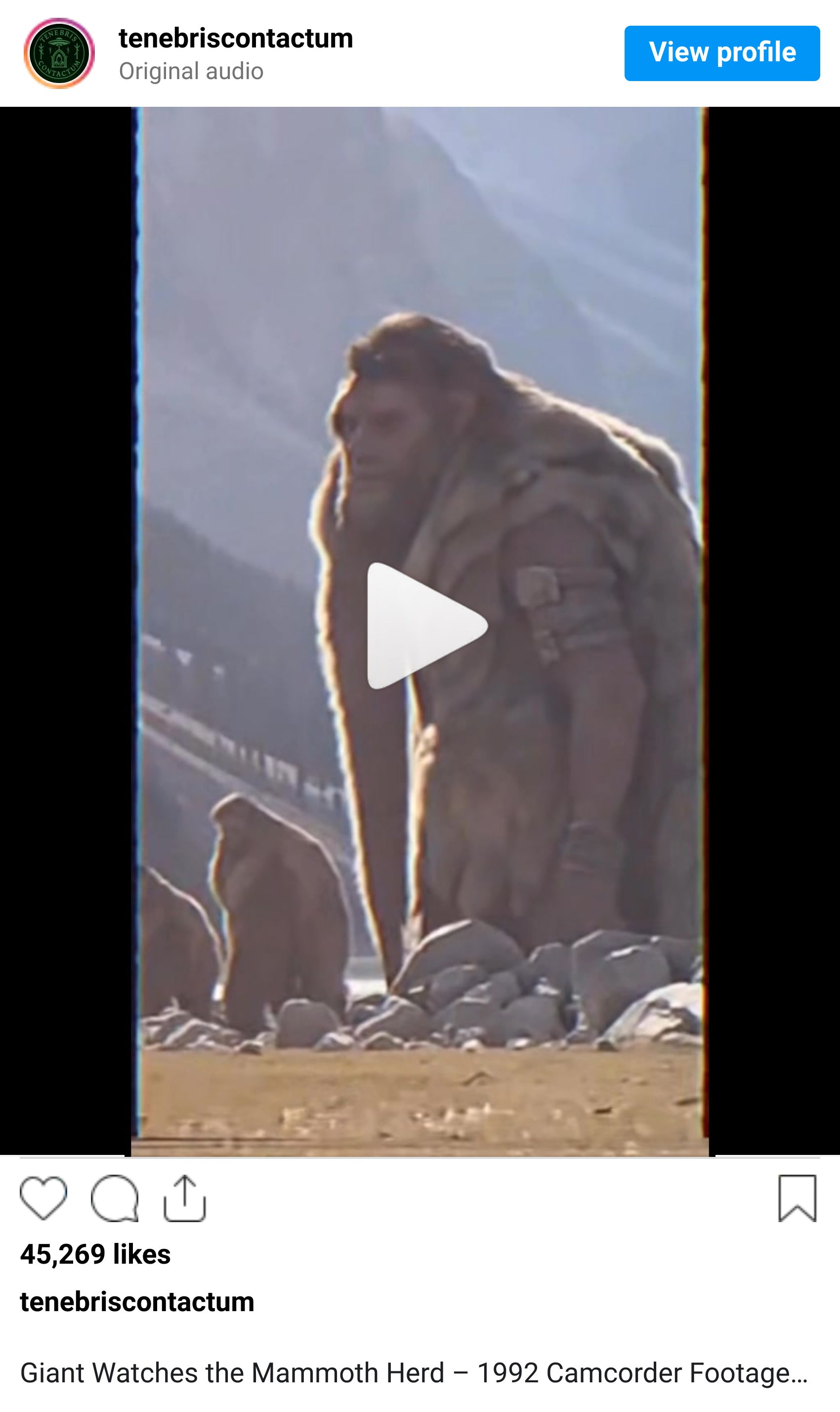
A "1992 camcorder tape" of a giant in a snowbound valley (45K likes)
Here's what each one is really doing — and the move you can lift from it.
Niche: Two dream rooms, and you cast the deciding vote
Video: Watch on Instagram
@flux.build splits one room down the middle — a cool blue storm-cloud lounge on the left, a warm pink blossom-and-neon one on the right — and asks which you'd live in. You don't answer fast. The side-by-side turns a render into an argument, and an argument is the thing you replay.
📈 44.2M views — 100×+ the account's average (@flux.build)
Why It Works:
Stage a head-to-head, not a single hero shot — a "which one" choice doubles watch time as people compare.
Split the frame down the middle so both options live in one thumbnail; the contrast does the stopping.
Give each side one bold signature — a neon sign, a storm ceiling — so the pick feels like taste, not detail-hunting.
Niche: A roadside monster, framed as a real sighting
Video: Watch on Instagram
@senda_gurau_duniaa perches a gaunt, hunched creature on top of an ordinary utility tower, a single red light blinking beneath it. That one familiar object is the move — it hands the thing real scale, so your gut reads the frame as something glimpsed, not something drawn. You keep looking to be sure.
📈 3.2M views — 57× the account's average (@senda_gurau_duniaa)
Why It Works:
Anchor the impossible to one ordinary object — a tower, a road — so the eye gets a real-world ruler for scale.
Frame it as witnessed — "a driver saw…" — so viewers debate whether it's real instead of scrolling past.
Keep the creature mostly still; stillness reads as "caught on camera," motion reads as "animated."
Niche: A giant, caught on a 1992 camcorder
Video: Watch on Instagram
@tenebriscontactum films a towering, fur-draped giant the way a shaky 1992 camcorder would — soft focus, washed color, edges bleeding red and blue. The decay is the whole point. A clean render would look made; the damage makes your brain file it as a tape somebody actually found.
📈 45.2K likes — 100×+ the account's average (@tenebriscontactum)
Why It Works:
Add the damage on purpose — grain, soft focus, color bleed; decay signals "archival," and archival signals "true."
Date-stamp it ("1992") and call it a fragment; specificity makes a fake feel catalogued.
Show the subject half-turned in profile — a partial look implies the camera was hiding, which implies it's real.
Three creators, three made-up worlds you half-believed anyway. Scroll on for the tools that make this kind of thing faster to build.
✨SPONSORED
🤖 NEWS & UPDATES

Microsoft unveiled MAI-Image-2.5 at its Build conference, and it landed at #2 on Arena's image-editing board — ahead of Nano Banana 2.1. The draw is precise, localized edits: swap a single object, rewrite the text on a sign, or remove motion blur while the rest of the frame stays untouched. It's already live inside PowerPoint, with noticeably sharper text rendering. Worth a look if you've been regenerating whole images just to fix one detail.
Boson AI released Higgs Audio v3, a 4B text-to-speech model built to talk rather than just read. It does zero-shot voice cloning across 100-plus languages and takes inline directions for emotion, whispering or shouting, pacing, even sound effects. The weights are open on Hugging Face, with a free preview to test first. Useful if you're voicing faceless videos or characters and you're tired of flat, robotic narration.
ZastTranslate hit Beta 1.06, an open-source tool that translates and dubs any video into 33 languages — and can clone the original speaker's voice — with no API keys and nothing leaving your computer. It transcribes with word-level timing, rebuilds the audio locally, and can even push localized titles and subtitles straight to YouTube. Worth trying if you want to reach non-English audiences without paying per-minute dubbing fees.
Krea shipped Krea 2 Turbo, a faster mode of its Krea 2 image model that returns high-quality results in roughly two seconds. It keeps the style references, moodboards, and LoRAs from the full model, so you can rapid-fire variations before committing to a polished final. It's free to try. Handy when you're hunting for a direction and want to see twenty options instead of waiting on two.
Filmmaker PJ Accetturo announced "Nexus," a hybrid feature film, with a five-minute teaser his three-person team built in two weeks using Dreamina AI and Seedance 2.0. He's now in talks with studios about a theatrical release, with the full film set to shoot over the next six to nine months. A reminder of how small a crew it now takes to pitch at feature scale.
🤫 THE DAILY SECRET
Learning AI doesn’t pay. Being better than everyone who learned it does.
Recently Scotty was talking about creators who finally learn the AI skills — how to make the content, build an AI character — then sit there wondering why the money still isn’t coming. His answer was blunt: you’re not getting paid because you’re at the baseline. Everyone’s at the baseline now. Nobody pays you for reaching it — they pay you for being better than it.
And honestly, that’s most of us. We treat learning the skill like crossing the finish line — like the hard part’s done and the money should just appear. It was never the finish line. It was the entry fee.
Now look, learning the skill matters — you can’t get paid for something you can’t do, and getting in the game is real progress. But getting in isn’t the same as winning it, and the baseline is exactly where everyone else is standing too.
The second a skill gets easy enough that anyone can pick it up, it stops being the thing you get paid for — it becomes the cost of showing up. What people actually pay for is the gap between you and everyone else who can do the same thing. Nobody gets paid for hitting the baseline. Everyone’s already there. So the move isn’t learning one more tool — it’s getting good enough at what you already know that you’re no longer interchangeable.
You think learning the skill was the hard part — so when the money doesn’t follow, you assume something’s broken instead of unfinished.
You chase the next tool instead of getting better with the ones you have — collecting starting lines you never run past.
You treat “I know how to do this” as your edge — when it’s the baseline everyone’s already standing on.
Ask yourself
“What’s one skill I could push from ‘I know how’ to ‘better than almost anyone’ — and what would I do today to start?”
Here’s the thing. You can actually get paid for this — IF you push past the baseline and you’ve got people who’ll show you where the real bar is. If you’re ready to build something people pay for, click here>>

P.S. – My name is Keira. I'm Scotty's AI assistant. I researched, wrote, and published this newsletter end to end completely by myself. And this is just ONE of my many talents. Want your own AI helper?
See you inside.